Architectural shingle roofs for Fayetteville's heat, humidity and summer storms
Most roofs in Cumberland County are asphalt, and nearly every new one is an architectural shingle. The shingle is only half the job. The other half is how it is nailed, what sits under it and how the edges, valleys and ridge are finished.
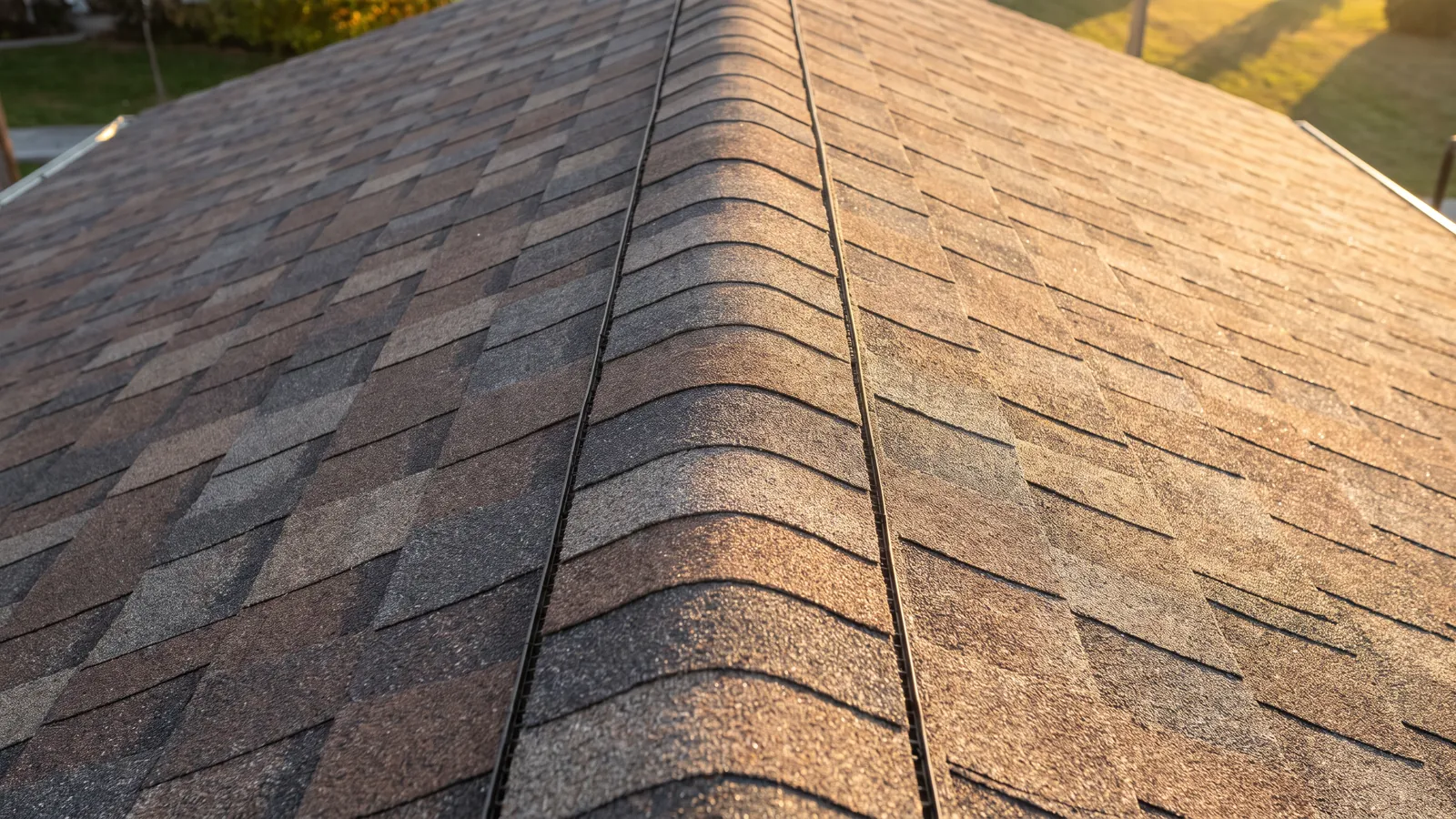
Drive through almost any Fayetteville subdivision built between the mid-1970s and 2000 and you are looking at asphalt shingles. The architectural shingles that went on in the 1990s are now 25 to 30 years old, which is about where that generation gives out, and many of those roofs are due for replacement between now and 2030. Hot, humid summers and strong sun do the damage: heat softens the asphalt, UV loosens the granules, and once the granules wash into the gutters the shingle underneath ages fast.
Three-tab and architectural shingles look alike in a catalog and nothing alike on a roof. A three-tab is a single flat layer cut into tabs. An architectural (also called dimensional or laminated) shingle bonds two layers together, so it is thicker and heavier, casts the shadow lines that read like wood shake from the street, and hides small waves in older decking. The extra weight helps it lie flat in gusty storms. For a full reroof we quote architectural nearly every time; three-tab survives mostly as a patch material for older three-tab roofs.
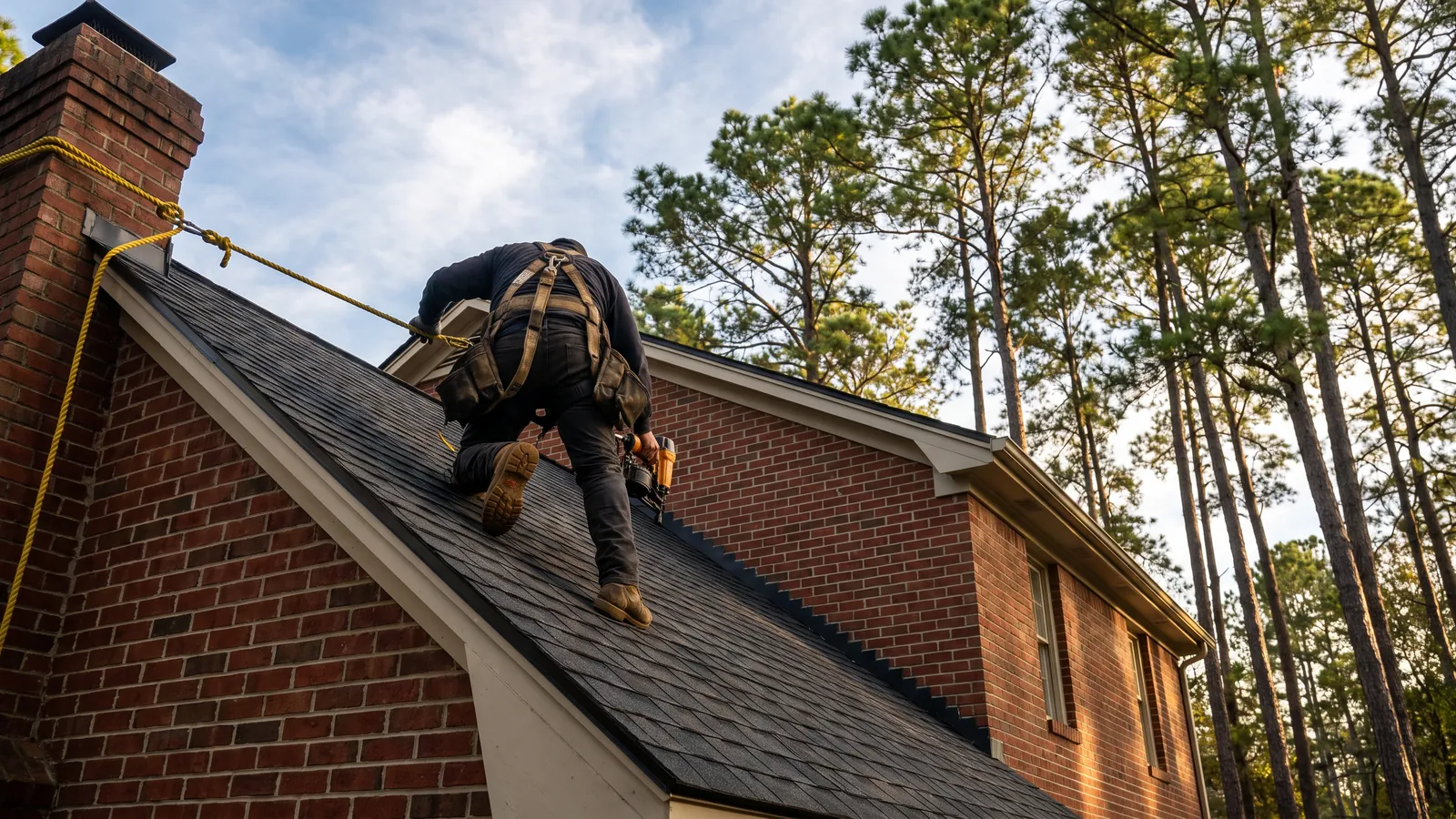
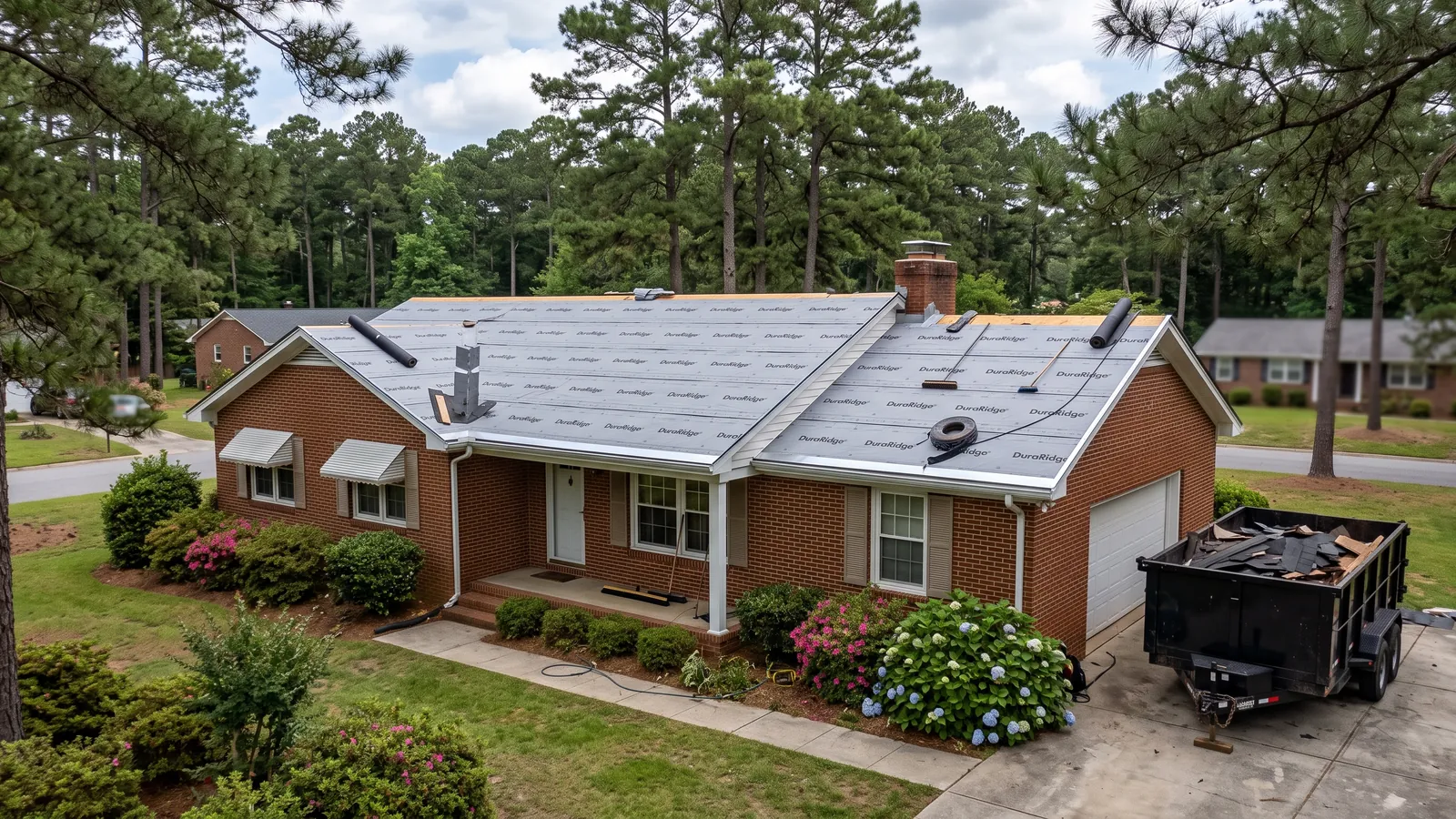
What goes under and around the shingle decides how long it lasts. Synthetic underlayment over the whole deck, with extra protection in valleys and around chimneys and pipes. A sealed starter strip along the eaves and rakes so the first course cannot be peeled up. Nails driven in the manufacturer's nailing zone; high nails are one of the most common reasons tabs blow off. New drip edge, new step flashing along walls, new pipe boots, and hip and ridge caps made for the shingle line. Attic airflow gets checked too, because a hot attic bakes shingles from below; see attic ventilation.
Those black streaks running down the shady side of so many roofs here are usually algae, which thrives in humid air. They start out cosmetic, but they hold moisture and make a roof look older than it is. Algae-resistant shingles with treated granules cost a little more per bundle and are worth asking about. When the job is a repair rather than a new roof, we carry sample pieces up the ladder so the patch blends as well as an older roof allows.
What the job covers
Nailed in the zone
Every course fastened where the manufacturer says, the detail that decides whether tabs stay down in a gust.
Sealed starter at the edges
Adhesive starter strip along eaves and rakes so wind has nothing to grab at the perimeter.
Synthetic underlayment
A full layer over the decking, with added protection in valleys and around every penetration.
New metal where it counts
Drip edge, step flashing and pipe boots replaced on every full reroof, not reused.
Airflow checked
Intake and exhaust looked at so summer attic heat does not cook new shingles from underneath.
Color matched on repairs
Sample pieces carried up to the roof so a patch on an older roof blends in.
Shingle roof prices in the Fayetteville area
| Work | Budget range | What to know |
|---|---|---|
| Architectural shingles, per sq ft installed | $4.25 – $12.25 | HomeAdvisor national range |
| Full replacement, about 2,000 sq ft of roof | $8,000 – $24,000 | National average about $12,300 |
| Shingle repair (a section of tabs) | about $975 | Angi's national average for asphalt shingle repair |
| Algae-resistant shingle upgrade | Quoted with the roof | Small difference per bundle |
| Extra-layer tear-off | Itemized | VA requires all old shingles off when a defective roof with 3+ layers is replaced |
| Rotten decking | Per sheet, itemized | Photographed before it is covered |
National figures from HomeAdvisor and Angi, shown so you can budget. Your price comes after we measure the roof, count the layers and look at the decking from the attic, and it is written down before anything is scheduled.
On the job
Architectural shingles: what people ask us
Architectural or three-tab?
Architectural for a full roof. They are thicker, heavier and look better, and three-tab is far less common on new roofs. We still use three-tab to patch older three-tab roofs.
What are the dark streaks on my roof?
Usually algae, which loves our humid summers. It starts cosmetic, but the streaks hold moisture and age the look of the roof. Algae-resistant shingles slow it on a new roof; on an existing one, a gentle treatment helps and pressure washing does more harm than good.
How long will a new shingle roof last here?
Heat, humidity and sun shorten asphalt life in our climate. The architectural shingles from the 1990s are reaching 25 to 30 years now, and that is a fair expectation for a well-vented, correctly nailed roof. A hot, stuffy attic takes years off it.
Can new shingles go over the old ones?
Some roofs can take an overlay, but we rarely recommend it. You cannot see the decking, the roof gets heavier, and VA appraisals require all old shingles removed when a defective roof with three or more layers is replaced. A tear-off costs more today and saves trouble at sale time.
Why are there granules in my gutters?
A little loss right after installation is normal. Steady, heavy loss on an older roof means the asphalt is exposed to the sun and the shingles are near the end. After hail, granule loss in bruised spots is damage worth photographing.
How long does a shingle replacement take?
Most single-family roofs are torn off and reshingled in one to two days, weather allowing. Two stories, steep pitches and decking repairs can add a day.